

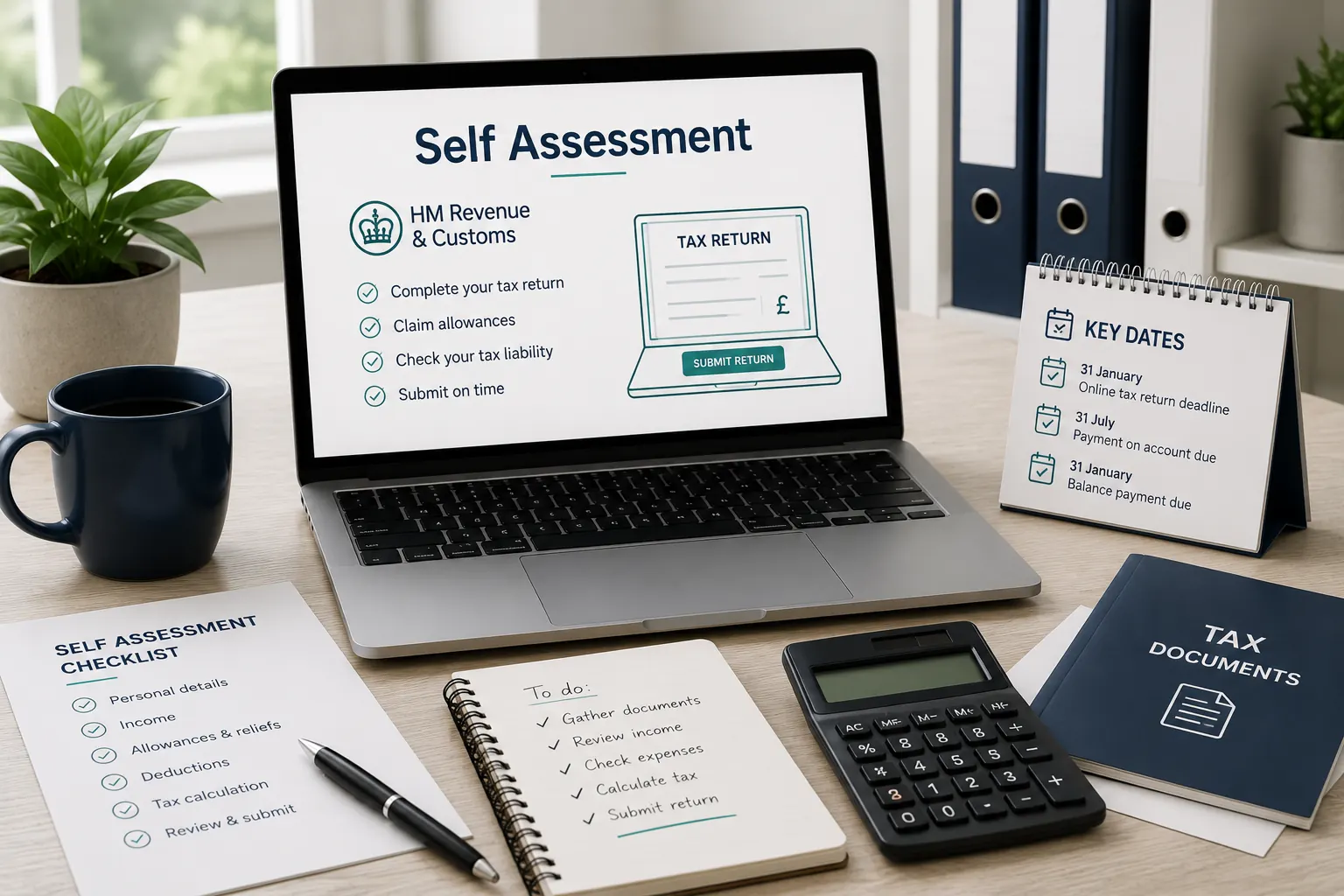
Who this service is for
Self Assessment reaches a wide range of people, and this service is for any of them in the Birmingham area who want the return done properly. That includes sole traders and freelancers, partners in a partnership, company directors, landlords with rental income, higher earners, people with investment or dividend income, those disposing of chargeable assets such as shares or property, people with overseas income, and anyone who has simply received a notice to file. If you are unsure whether you even need to complete one, that is a fair question and a good place for us to start.
How we can help
We take the return off your desk and turn a fiddly, deadline-driven task into something predictable. We check which income and gains actually need to be reported, apply the allowances and reliefs that genuinely fit your circumstances, and make sure the calculation, including any payments on account, is right before anything is filed. Just as importantly, we work to a timetable that gives you early sight of what you owe, rather than a figure landing days before the deadline.
What’s included
- Registering you for Self Assessment, or reactivating a dormant record where needed
- Collecting and organising your income and expense records for the year
- Reviewing self-employment, partnership, rental, employment and investment income
- Gathering Capital Gains Tax information on disposals and applying available reliefs
- Applying the allowances and reliefs relevant to your circumstances
- Preparing the tax calculation and explaining how the figure is reached
- Calculating payments on account and advising when a reduction may be appropriate
- Filing the completed return with HMRC and confirming the amounts and dates to pay
- Handling routine HMRC correspondence relating to the return
- Preparing early so you can plan the payment, and flagging Making Tax Digital for Income Tax where it applies
How it works
- We confirm whether a return is required and, if so, register or reactivate your record.
- We send a clear checklist of the information we need for your particular sources of income.
- You share your records; we review them and query anything that looks incomplete or unusual.
- We prepare the return and calculation and send them to you with a plain-English summary.
- Once you have approved it, we file with HMRC and confirm what to pay and when.
What we’ll need from you
The exact list depends on your income, but typically we need details of self-employment or rental income and expenses, P60s and P45s, records of dividends and interest, pension contributions and any Gift Aid, and information on any assets you have sold during the year. If you have overseas income or came to or left the UK part way through the year, tell us, as it affects how the return is completed. Complete, well-organised records mean a quicker turnaround and fewer follow-up questions.
Common mistakes to avoid
- Assuming a return is or is not needed without checking your actual circumstances
- Leaving everything to January, when time to correct errors or plan the payment has run out
- Forgetting payments on account and being surprised by the January total
- Overlooking a disposal of shares or property that should have been reported
- Missing allowances such as pension relief or allowable expenses that reduce the bill
- Not keeping records long enough to support the figures if HMRC asks
Serving Birmingham and the Midlands
We prepare Self Assessment returns for individuals right across Birmingham and the West Midlands, using secure cloud tools so you can share documents without posting originals. Where your situation is more involved, a meeting can be arranged to talk it through.
Frequently asked questions
I'm a company director. Do I automatically have to file a return?
Not automatically. Being a director does not by itself mean a return is required; it depends on your income and circumstances and whether HMRC has asked you to file. We look at your actual situation and tell you whether a return is needed, rather than assuming one way or the other.
What are payments on account and why am I being asked for more?
Payments on account are advance instalments towards next year's bill, usually due in January and July, based on the current year's liability. They can make a first full year feel heavy because you are effectively paying ahead. We calculate them, explain the timing, and check whether a reduction is appropriate.
I sold some shares and a rental flat this year. Does that go on my return?
Disposals of chargeable assets such as shares or property can give rise to Capital Gains Tax, which is often reported through Self Assessment, though a UK residential property sale can have its own earlier reporting deadline. We gather the figures, apply any reliefs and allowances that fit, and report it correctly.
Will Making Tax Digital change how I do this?
For some taxpayers with business or property income, Making Tax Digital for Income Tax introduces digital record-keeping and more frequent updates rather than a single annual return. Whether and when it applies depends on your income and the timetable. We will tell you if it affects you and help you get ready.