

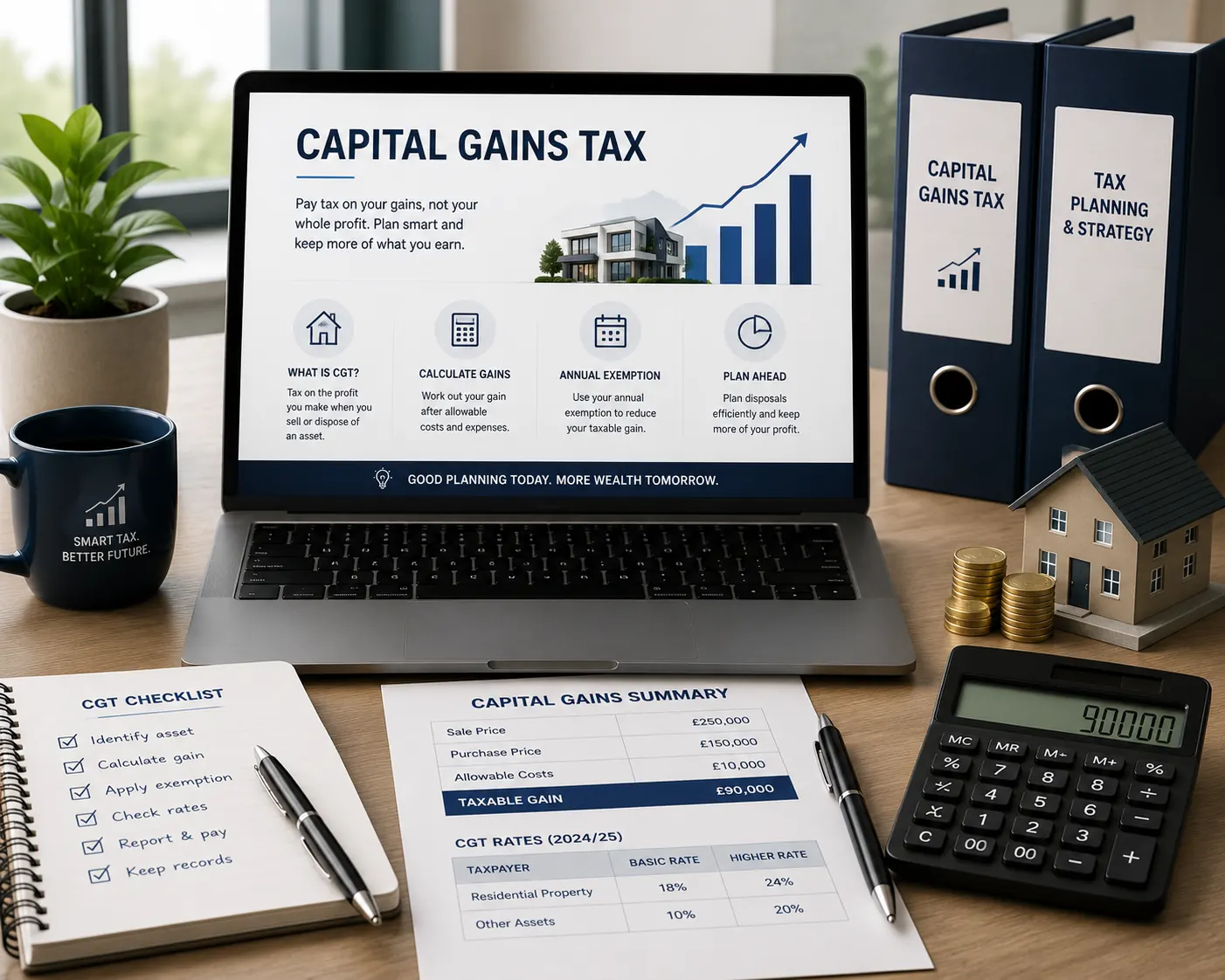
Who this service is for
This service is for people in the Birmingham area facing a Capital Gains Tax question after a disposal, or ideally before one. That includes anyone selling a second home or rental property, disposing of shares or other investments, selling or giving away business assets, transferring assets between family members, or dealing with jointly owned property where each owner’s share matters. It is equally for people who have already sold and need it reported correctly, and for those still deciding when and how to sell who want to understand the tax first.
How we can help
We separate what is taxable from what is not, which is where a lot of unnecessary worry comes from. We establish the gain properly (reconstructing the base cost from old paperwork if the records are patchy), apply the reliefs and allowances that genuinely fit, and report the disposal through the correct HMRC channel to the right deadline. Where you involve us before you sell, we can look at the timing and structure of a disposal so decisions are made with the tax position in view rather than after the event.
What’s included
- Calculating gains and losses on UK property disposals, including second homes and rental property
- Working out the position on shares, funds and other investments
- Dealing with disposals of business assets and considering any reliefs that apply
- Handling gifts and transfers, including between spouses or civil partners and other family members
- Apportioning gains correctly on jointly owned assets
- Identifying and relieving capital losses, in-year and carried forward
- Applying relevant reliefs and your annual exempt amount
- Reconstructing base cost and allowable expenditure where original records are incomplete
- Reporting UK residential property disposals through the correct HMRC route, to deadline
- Reporting gains through Self Assessment where that is the appropriate route
- Pre-disposal planning where you ask for advice early enough to act on it
How it works
- You tell us about the asset and whether it has already been sold or is still being considered.
- We list the information we need to establish the gain: costs, dates and ownership shares.
- We calculate the gain or loss, apply the reliefs and exemptions that fit, and explain the result.
- We report the disposal through the right route, whether the 60-day property service or Self Assessment as appropriate.
- We confirm what is payable and by when, and keep the working papers in case HMRC has questions.
What we’ll need from you
We need the purchase and sale details, including dates, prices and the completion date, together with evidence of allowable costs such as buying and selling fees and qualifying improvements. For jointly held assets we need each owner’s share, and for gifts we need the relationship and the asset’s value. If records have been lost over the years, share whatever you have and we will help reconstruct the figures. For a residential property sale, contact us at or near completion so the 60-day window is not missed.
Common mistakes to avoid
- Believing the whole sale price is taxed rather than just the gain
- Missing the 60-day reporting and payment deadline on a UK residential property disposal
- Forgetting the allowable costs that reduce the gain, such as purchase fees, selling costs and qualifying improvements
- Overlooking the annual exempt amount or a relief that genuinely applies
- Ignoring capital losses that could be set against gains
- Leaving advice until after completion, when the room to plan has already gone
Serving Birmingham and the Midlands
We advise on Capital Gains Tax for clients throughout Birmingham and the West Midlands, largely through cloud accounting and secure document sharing so a disposal can be dealt with promptly wherever you are. When a sale is significant or the timing is open, a meeting can be arranged to plan it.
Frequently asked questions
I sold a property. Is the whole sale price taxed?
No. Capital Gains Tax is charged on the gain, broadly the difference between what you sell for and what you paid, adjusted for allowable costs, not on the full sale proceeds. Reliefs and your annual exemption may reduce it further. Selling at a profit does not mean the entire amount received is taxable.
How quickly do I have to report a property sale?
Where a UK residential property disposal produces Capital Gains Tax to pay, the reporting and payment deadline can be 60 days from completion, through a dedicated HMRC service, separate from your normal Self Assessment. This is a common trap, so if you are selling a second home or rental property, speak to us around completion.
Can you tell me my bill before I've sold?
We can explain how the tax works and what will affect it, but we cannot give you personalised figures without your actual facts: purchase cost, improvement costs, dates, ownership shares and any reliefs. Once we have those, we can calculate it. Estimates offered without your details are not reliable.
I made a loss on some shares. Does that count for anything?
Possibly. Capital losses can generally be set against capital gains, in the same year or carried forward, subject to the rules and to being reported correctly. We look at your gains and losses together so the position is worked out as a whole rather than in isolation.