

Bookkeeping is priced on two numbers before anything else: how many transactions your business generates, and how often you want them processed. Everything else (record quality, software, complexity) adjusts the price around that core. This makes bookkeeping quotes unusually easy to compare, provided you know your own volumes.
Bookkeeping is one strand of the wider fee picture we map in how much an accountant costs a small business. Here we focus on the bookkeeping line itself.
Volume: the number that matters most
Every sales invoice, purchase bill, expense claim and bank entry has to be recorded, categorised and reconciled. A business with a handful of large invoices each month is cheap to keep; a shop or trades business with daily card takings and dozens of supplier payments is not, even at identical turnover. Before requesting quotes, pull a typical month’s bank statement and count the lines. That single number does more for quote accuracy than any description of your business.
Frequency: weekly, monthly or quarterly
How current you need your books to be is a genuine choice with a price attached:
| Frequency | Suits | Trade-off |
|---|---|---|
| Weekly | Businesses managing cash closely or chasing debtors | Highest touch, highest fee |
| Monthly | Most established small businesses | Good balance of currency and cost |
| Quarterly | Low-volume businesses, often aligned to VAT | Cheapest, but books are stale between visits |
VAT-registered businesses rarely go longer than quarterly, since returns depend on reconciled records. If you use figures to make decisions about pricing, hiring or stock, stale books quietly cost more than the fee difference.
Record quality adjusts everything
A bookkeeper working from a connected bank feed with receipts captured digitally moves fast. One working from paper, missing invoices and an unreconciled bank moves slowly, and the fee reflects it. HMRC’s record-keeping expectations for the self-employed and for pay and tax records generally are the baseline; how far your systems exceed that baseline sets the pace of the work.
If you are behind, expect the backlog to be priced separately from the ongoing service. We explain how in what affects catch-up bookkeeping costs.
What a bookkeeping service should include
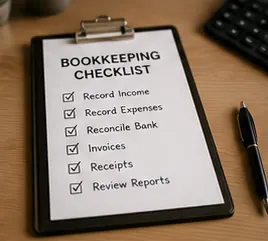
A defined monthly bookkeeping scope typically covers: processing sales and purchase records, bank and card reconciliations, expense categorisation, a debtors and creditors position, and handover-ready records for VAT returns and year-end. Ask specifically about:
- Who chases missing paperwork, them or you
- Whether reconciliations cover every account, including cards and payment platforms
- Whether the fee includes fixing your categorisation errors or only their own entries
- What happens in months with unusual volume
In-house, DIY or outsourced
Doing it yourself costs your evenings; hiring in-house costs a salary plus management; outsourcing prices the actual hours used. For most small businesses the crossover point comes when the owner’s time is worth more selling or delivering than categorising receipts. There is also a quality argument: professional bookkeeping tends to pay part of its own fee through cleaner year-end work, a saving we quantify in how to reduce accountancy fees.
Frequently asked questions
Why do bookkeeping quotes ask for my bank statements?
Because transaction count is the honest measure of workload. A firm quoting without volume data is guessing, and guessed quotes get revised later, usually upward.
Does cloud accounting software replace a bookkeeper?
It removes the typing, not the judgement. Feeds still need categorising, anomalies still need investigating, and reconciliation still needs doing. Software makes a bookkeeper faster and cheaper, not redundant.
Should the same firm do my bookkeeping and my accounts?
It often works well: no handover friction, one point of responsibility, and the year-end team inherits records they trust. The alternative (separate bookkeeper and accountant) is fine too, if the two communicate.
What makes a bookkeeping fee rise mid-engagement?
Sustained volume growth, new sales channels or payment platforms, taking on staff expenses, or VAT registration. Agree upfront that changes are discussed before they are billed.
Can I do part of the bookkeeping myself to lower the fee?
Yes. A common split is you raising sales invoices and capturing receipts while the bookkeeper reconciles and reviews. It only saves money if your part is done consistently, so agree who owns what in writing.
Get a bookkeeping quote from your real numbers
Our bookkeeping service is priced from your actual transaction volumes, with the scope written down. See the fees page for how our pricing fits together. Request a quote and we will tell you exactly what your volumes translate to.